

The Rise of Conscious Luxury
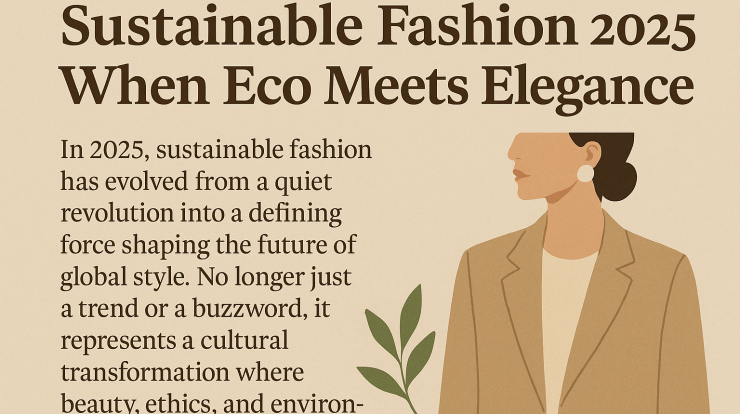
In 2025, sustainable fashion has evolved from a quiet revolution into a defining force shaping the future of global style. No longer just a trend or a buzzword, it represents a cultural transformation where beauty, ethics, and environmental responsibility harmoniously coexist. Today’s luxury consumers—especially in Europe—are not merely buying garments; they are investing in stories of craftsmanship, traceable materials, and responsible innovation.
In this era of sustainable fashion 2025, elegance is redefined. High-end labels, once associated with excess, now strive for transparency and eco-integrity. The movement is powered by a new generation of designers and consumers who believe that true luxury lies not in extravagance, but in purpose.
As the world faces increasing environmental challenges, the fashion industry has been called to action. Brands are rethinking production—from organic farming and natural dyeing techniques to regenerative materials and circular design systems. And nowhere is this shift more evident than in the ateliers of Europe’s eco-luxury fashion houses.
Eco-Materials: Nature’s New Couture
The foundation of the sustainable fashion movement lies in eco-material innovation. Designers are moving beyond synthetic fabrics to embrace materials that honor the Earth. Organic cotton, Tencel, hemp, and bamboo have become wardrobe staples, while new-generation textiles—such as mushroom leather (Mylo), pineapple fiber (Piñatex), and lab-grown silk—are making waves across the runways.
One of the most influential pioneers in this space is Stella McCartney, who has consistently challenged the industry’s norms since her early collections. Her 2025 line highlights regenerated nylon and plant-based leather alternatives that blend functionality with refined aesthetics. McCartney’s philosophy has long been clear: fashion should not harm animals or the planet. Her label has become synonymous with eco-luxury, proving that ethical choices can coexist beautifully with high-end craftsmanship.
Moreover, many emerging European designers are following her lead. Italian luxury houses are now sourcing silk from ethical farms, while Scandinavian brands prioritize low-impact dyeing methods that reduce water waste. Even Parisian couture, once known for opulent materials, is embracing minimalist yet sustainable fabrics—creating garments that age gracefully rather than expire with trends.
As textile technology advances, sustainability and sophistication are no longer at odds. The future wardrobe is both elegant and enduring, designed to last generations.
European Eco-Luxury: Redefining Prestige
Europe has long been the cradle of high fashion. Today, it is also the heart of the eco-luxury renaissance. Iconic fashion capitals like Milan, Paris, and Copenhagen are witnessing a new era where craftsmanship meets consciousness.
Brands such as Stella McCartney, Chloé, and Gabriela Hearst are setting the tone for a more ethical luxury market. Chloé, under its sustainability vision, has been certified as a B Corporation—proving that a global house can be profitable and purpose-driven simultaneously. Gabriela Hearst’s collections, meanwhile, use deadstock cashmere and recycled wool, seamlessly blending sustainability with timeless sophistication.
Even traditional powerhouses like Gucci and Prada are incorporating sustainability frameworks. From reducing carbon footprints to implementing take-back programs and biodegradable packaging, these efforts are rewriting what prestige means in modern fashion.
In Northern Europe, designers like Ganni and Filippa K continue to push forward-thinking collections rooted in sustainability. Copenhagen Fashion Week now mandates environmental accountability, making it a model for the world.
These European eco-luxury brands showcase how responsibility can enhance rather than limit creativity. The modern definition of status is no longer about ownership—it’s about awareness.
Global Green Awareness: Fashion’s Collective Movement
Sustainability is no longer confined to the elite corners of couture. It’s a global awareness movement that bridges culture, geography, and socioeconomics. Around the world, consumers are demanding transparency, asking: Who made my clothes? and What is the impact behind this garment?
The post-pandemic era has accelerated this shift. According to Vogue Sustainability, 2025 marks a pivotal year where fashion houses are measured not just by their creative output, but by their environmental and ethical commitments. From New York to Tokyo, fashion education now integrates sustainability as a core discipline, nurturing a new generation of responsible designers.
Social media has amplified the voice of conscious consumers. Hashtags like #SlowFashion, #EcoElegance, and #WearTheChange have transformed sustainability from a niche interest into a lifestyle aspiration. Luxury influencers are now prioritizing second-hand pieces, upcycling projects, and digital fashion wardrobes that reduce physical waste.
The movement is also fueled by innovation in circular fashion systems—where garments are designed to be repaired, resold, or recycled. Major brands are adopting digital IDs in clothing tags, allowing consumers to trace the entire lifecycle of their pieces. This transparency builds trust and strengthens the connection between designer, maker, and wearer.
When Eco Meets Elegance
At the heart of sustainable fashion 2025 lies a powerful realization: elegance is not about excess—it’s about essence. When eco-conscious values meet timeless design, fashion transcends the seasons. It becomes an art form that respects both humanity and the environment.
The modern consumer doesn’t have to choose between luxury and ethics. They can have both—a perfectly tailored suit made of recycled wool, a handbag crafted from plant-based leather, or a couture gown dyed with natural pigments. These creations tell stories of innovation, compassion, and hope.
Luxury, in its truest sense, is evolving into something more personal and poetic. It’s not only what you wear, but why you wear it. Each garment becomes a statement—a reflection of individuality, mindfulness, and responsibility.
As the industry moves forward, the fashion world’s greatest challenge will not be creating more—it will be creating better. Sustainable fashion is no longer the future; it is the elegant present we are finally embracing.